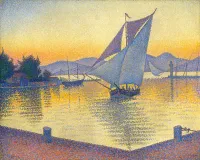
The must-see exhibition of this autumn! From 24 October, experience an impressive overview of Paul Signac (1863–1935), the master of Neo-Impressionism, at Kunsthal Rotterdam. At the end of the nineteenth century, building on the work of Georges Seurat, Signac developed Pointillism: a painting technique in which dots and short brushstrokes come together to form a rhythmic symphony of colour. This exhibition offers an in-depth introduction to Signac’s work, presented on a scale rarely seen in the Netherlands. At the same time, Symphony of Colours reveals how his influence resonates in the painting of his contemporaries.
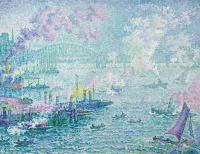
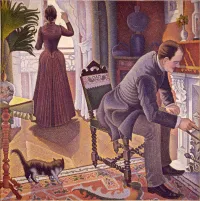
In the exhibition, you follow Signac’s development through lively harbour scenes, colourful landscapes and carefully composed portraits. One of the highlights is the sun-drenched Le Port au soleil couchant, Opus 236 (1892). Also on view is Le port de Rotterdam (1907), created during his stay in the Netherlands.
Vibrant colours
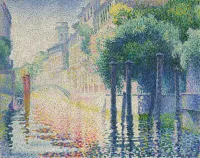
In this exhibition, you will discover the magical effect of Pointillism. Artists working within this movement base their work on strict scientific theories of colour. Painters do not mix the different colours of paint, but apply them side by side in dots and dabs, so that the viewer’s eye optically blends the colours. Complementary colours – orange next to blue, red next to green – enhance one another and create a bright, vibrant effect.
Signac and the Netherlands
Signac was a great admirer of the Netherlands. He visited our country on several occasions and subsequently produced large canvases, including one of the port of Rotterdam. He was also clearly impressed by the polders, harbours and cloudy skies in places such as Amsterdam, Volendam and Dordrecht. In the exhibition, you can see how the Dutch painter Jan Toorop (1858–1928) was influenced by him and introduced Neo-Impressionism to the Netherlands.
Writer, collector, ambassador
Signac. Symphony of Colours shows more than the work of one artist. As a writer, ambassador, collector and mentor, Signac played a key role within Neo-Impressionism and actively contributed to the international spread of the movement. His influence extended to artists across Europe. The exhibition therefore also features works by Lucie Cousturier, Henri-Edmond Cross, Curt Herrmann, Maximilien Luce, Camille Pissarro, Théo van Rysselberghe, Jeanne Selmersheim-Desgrange, Georges Seurat and Jan Toorop.
The exhibition is organised in close collaboration with Museum Barberini in Potsdam, known for its impressive collection of (Neo-)Impressionist paintings.
Partners
Collaboration partners






About your visit
Frequently Asked Questions
Skip listThe Kunsthal is open from Tuesday to Sunday, from 10:00 to 17:00 hrs. The Kunsthal Café opens half an hour earlier, so you can visit from 9:30 hrs until half an hour after closing time. Check the current opening hours.
Yes, you need to book a ticket with a start time in advance. This also applies if you have a Museum card, Rotterdam pass, or VriendenLoterij VIP Card. This way, you are guaranteed admission and we can ensure that your visit is as pleasant as possible. Book your start time.
Yes, with an online ticket, you can visit all the exhibitions that are on display on the date of your visit. You can also stay as long as you like. You are welcome at the Kunsthal from your designated start time until closing time. Book your start time.
In de Kunsthal Rotterdam zijn altijd meerdere wisselende en contrastrijke tentoonstellingen tegelijk te zien. Een volledig overzicht van alle actuele tentoonstellingen vind je op de tentoonstellingspagina.